The Boundary Between Humans and Computers
Web Writing Assignment # 3
Tuesday, October 23, 2007

Tuesday, October 2, 2007
My Very First Web Page
I created my first, very own web page! My page is centered around my up-comming twenty-first birthday, which will be October 14th! This site is very fun and interactive for possible viewers. It includes a day,hour,minute and second countdown to my age of reason as well as the local weather here in Boone, NC and a game of pac-man, which has and will always be my favorite video game! Here is the link . . . Come check it out!
http://ek66325.googlepages.com/home
http://ek66325.googlepages.com/home
Monday, October 1, 2007

As I look at the relationship between technology and society, I can
only see that the vast world before us is moving forward. And in the large scheme of
things, where else is there for us to go if not to go on to bigger and better things? In every
moment that has passed throughout the history time, it is a proven fact that there will always
be a loss of some aspect of our past. In the works Fire-Worship by Nathaniel Hawthorne and As We May Think by Vannevar Bush, I can envision the fate of our world from two completely different perspectives.
While
he is in despair and rather angry knowing that he will never again engage in
the same activities that he had in the past. If this new fancy woodstove
did in fact rob the essence of family talk, social values and his
enjoyment of day to day life, I feel he has only one choice before him. He must
embrace the world’s changes and find new and better ways to relate to
his environment, to socialize with the people around him and to spend quality
time with his family. 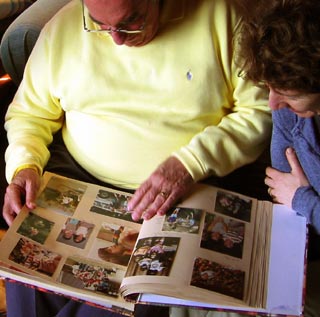
Likewise, I also believe that it is human nature to possess the endurance to push forward and to
engage in new technology, new experiences and new ways of living. As the war pushes to an end, Bush asks his audience: “what are the scientists to do next?” And the answer, I believe is to "Consider a future” in which the inherited knowledge of the ages is made more accessible to man kind. Up until this point in our history, scientists have used their knowledge to create inventions that have extended man’s physical powers rather than the powers of the mind. We must now look forward to “call for a new relationship between the thinking man and the sum of our knowledge.”
The efforts of our scientists over the last decades have given us lasting benefits, such as an increased control of our material environment, an increased knowledge of biological processes, which has given us freedom from many diseases, increased life-span and an overall improvement in mental health. Throughout war-time, our scientists shared greatly with one another, as well as with the scientists of our allies. As a team, we learned so much, paving the way for “knowledge to endure throughout the life of a race rather than that of an individual.
 ”
”
Looking back to the past, Bush recalls Leibnitz’s calculating machine and Babbage’s arithmetical machine, which, at the time of their invention were too complex and too unreliable to justify the construction and maintenance costs required of their use and practicality. Bush goes on to say that he now enjoys many machines with interchangeable parts such as the typewriter, the movie camera, the automobile and a system of automatic telecommunication exchange. These machines, which may have seemed futuristic in the past, are now being constructed with great economy, proving themselves to be complex, and yet now very reliable. “The world has arrived at an age of cheap complex devices of great reliability and something is bound to come of it.” As Bush describes in detail the camera of his day, he says that striking improvements are just around the corner. Just as any new technology is in it’s novel beginnings, the process will be slow at first, but someone, someday may speed it up. This is enough to keep researchers busy in the continuous process of modification and extension of ideas. This is true of any invention in it's beginnings; inventors have to start somewhere in order to arrive at a successful end. Considering the nature of the human mind, I feel it is very unrealistic to believe that if a process of innovation were never started, we would be perfectly and ignorantly content living in a world like Hawthorne describes. Even from the dawn of man, we have slowly made improvements through trial and era, often involving great losses. But man-kind has always been able to learn from mistakes and push foward in order to improve conditions and ways of completing tasks and living our lives from day to day. Bush notes that “it would be a brave man who could predict that such a process will always remain slow, clumsy, and faulty in detail.
Throughout our past we have made a record of history which has helped us to avoid repeating past mistakes. Through a notion of longevity, we have recorded the past in hopes of improving the future for the next generations to come. Bush envisions a type of online dictionary that would be reduced to the volume of a matchbox, which he refers to as the “on-line Encyclopedia Britanica.” He dreams that “a library of a million volumes could be compressed into one end of a desk!” Even so, he admits that it is not enough to simply make and store these libraries of records, people must be able to consult the information as well. Even in the case of modern day libraries, information is not readily consulted, it is only nibbled at by a few people. The internet of the 21st century has succeeded in providing us with at home convenience and easy access to vast amounts of information at our finger tips. If people everywhere could access the information and knowledge our ancestors have collected for us, we may all have an extra cutting edge for future success.
Bush mentions that compression of information is also important when it comes to costs. The future “material for microfilm Britannica would cost a nickel and it would be mailed anywhere for a cent. This vision of technology holds a striking resemblance to our modern day costs in accessing the internet. As we discussed in class, we pay a small fee for internet connection through cable providers and we buy computers and pay for their expected and unexpected maintenance needs. But, in relative figures, I feel that the overall service, convenience and benefits we receive well outweigh the monetary costs we shell out. Bush had the right idea in knowing that his system would be less popular and harder to access if it were to be expensive. If Tim Berners Lee would not have opened up his internet invention to the world at no cost, I know the entire program would be compeletely different and would very likely discourage many people from using it. Bush knows that there is a great need for something of this magnitude as he states: there will always be plenty of things to compute in the detailed affairs of millions of people doing complicated things".
Bush envisions a type of speech recognition machine which is expected to type when talked to. He speaks of the Voder, which he saw at a recent World Fair, and of the Vocoder, which has been invented in the
In class we have spoke several times about the difference between man and machine. We have come to a point in history where, just as Bush imagined, machines function more reliably than any human operator could and at rates thousands of times as fast. But these mechanical aids before us have and will continue to greatly aid the transformation in scientific records; again, just as Bush had hoped with his projection. Even so, there couldn’t ever be a mechanical substitute for the mature thoughts of humans because “mechanical thought and creative thought are very different things.” Bush argues this point in chapter four by going on to say: “If scientific reasoning were limited to logical processes of arithmetic, we should not get far in our understanding of the physical world. One might as well attempt to grasp the game of poker entirely by the use of mathematics of probability.”
In response to these statements, I must proclaim that computers have come much further than Bush had ever hoped, or feared for them to come. What will computers one day be capable of? In chapter five, Bush entertains the idea that if logical processes run along an accepted grove for an extended period of time, machines may be able to replicate the process. With the simple, yet clever, use of relay circuits, the machine would function “with no more slips than would be expected of a keyboard adding machine.” Are there robots in our future? Will computers ever be able to simulate human thought and emotion? Taking in consideration all of the things that have been invented up to our current day that we never would of thought humanly possibe, I think I would ignorant to say that anything isn't possible.
Nevertheless, the human mind is awe-inspiring beyond all else in nature. Man could not hope to accurately and fully duplicate mental processes artificially. But in the process building machines we will be able to learn from and most likely improve in the face of our research, our experiences and our endeavors along the way. The ability to consult the past in the present, as Bush explains the intricate process of “building a trail” in chapter seven, will undoubtedly facilitate scientific research in the future by providing records of the past. This envisioned technology will pave the way for man to produce, store and consult the records of his race. Perhaps Bush was searching for ways to learn from past mistakes and to prevent history from always repeating itself. If history did, in fact, repeat itself, we would not be moving forward in our conquests of the world. In conclusion to As We May Think, Bush writes: “Presumably man’s spirit should be elevated if he can better review his shady past and analyze more completely and objectively his present problems.” Through this science, man may finally have a complete record that may allow his wisdom of human experience to grow and flourish. We must, however, consider the circumstance that man may perish in conflict before he learns to use any technology for true good. But this does not seam to me any sort of viable reason to terminate the quest for greater knowledge because you may miss a joyous outcome.
In this day and age the World Wide Web and the Internet is our
future! So looking forward to the growth of the human race and the prosperity
of our world as a whole, I have to agree with Bush in that we are
completely dependent on this “memex” future abound. The invention of
the internet has proven to provide us with access to a global economy,
to global knowledge and to global communication and relationships. We are able to contact people all over the world through sites such as E-Harmony and Match.com. I
feel that it is an absolute positive change in our world that we are no
longer confined to our own local rural neighborhoods. Knowing the
things that I know now and seeing what is possible with the use of our
current day technology, I would not sacrifice it all for a little front
porch talk with the neighbors or a forced eight months of fire talk
with the with the family on those cold wintry nights. Today, we are
lucky enough to have it all and to have choices as to how we spend our
time and whom we spend our time with.
Looking at these stories in relation to my own experiences in using the internet in researching, communicating, and now blogging my thoughts to the world, I can think of it only as a good thing and as a great step forward for mankind. In the days
Bush, Vannevar. "July 1945: Atlantic Monthly." As We may Think
http://www.theatlantic.com/doc/194507/bush>.
Thursday, September 13, 2007
second writing assignment
In looking at the relationship between technology and society, I can only see that our world is moving forward. And in the large scheme of things, where else is there for us to go but forward? In every waking moment that passes throughout time, it is a fact that there will always be a loss of our past in some way or another. Hawthorne and Vannevar Bush seem to see this new coming of our future in two completely different lights and from two different polar angles. While Hawthorne sees the new technology of the wood stove as a corruption of all that has been good and wholesome in his life thus far, Bush envisions a technology that will revolutionize the current way of life.
I believe it is innate in our human nature to have a sense of nostalgia to past traditions and people and things we must leave behind. As Hawthorne reminisces about the way family life used to be, he is sad and a bit angry knowing that he will never again carry out the same activities as he has in the past. If this new fancy woodstove did in fact rob the essence of family talk, social values and his enjoyment of life, I feel he has only one choice before him; he must embrace the worlds changes and find new and better ways to relate to his environment, socialize with the people around him and spend quality time with his family. I also believe that it is human nature to possess the endurance to push forward and to engage in new technology, new experiences and new ways of living. After all, there is really only one option and one direction in which we may go; and that is forward and on to bigger and better things. As Vannevar Bush states in his piece As We May Think, "Consider a future”. In this day and age the World Wide Web or the Internet is our future! Bush saw a “future device for individual use, which is a sort of mechanized private file and library. It needs a name, and, to coin one at random, "memex" will do. A memex is a device in which an individual stores all his books, records, and communications, and which is mechanized so that it may be consulted with exceeding speed and flexibility. It is an enlarged intimate supplement to his memory." The type of predicted technology that Bush speaks of throughout this publication is very similar to the technology that has been invented in our current day. He envisions such similar things as the use of personal computers, the internet, the World Wide Web, speech recognition and online encyclopedias. Also, he mentions a type of push-button linking between documents with runs parallel to our modern day use of hypertext linking.
So looking forward to the growth of the human race and the prosperity of our world as a whole, I have to agree with Bush in that we are completely dependent in this “memex” future abound. The invention of the internet has proven to provide us with access to a global economy, to global knowledge and to global communication and relationships. I feel that it is an absolute positive change in our world that we are no longer confined to our own local rural neighborhoods. Knowing the things that I know now and seeing what is possible with the use of our current day technology, I would not sacrifice it all for a little front porch talk with the neighbors or a forced eight months of fire talk with the with the family on those cold wintry nights. Today, we are lucky enough to have it all and to have choices as to how we spend our time and whom we spend our time with.
I believe it is innate in our human nature to have a sense of nostalgia to past traditions and people and things we must leave behind. As Hawthorne reminisces about the way family life used to be, he is sad and a bit angry knowing that he will never again carry out the same activities as he has in the past. If this new fancy woodstove did in fact rob the essence of family talk, social values and his enjoyment of life, I feel he has only one choice before him; he must embrace the worlds changes and find new and better ways to relate to his environment, socialize with the people around him and spend quality time with his family. I also believe that it is human nature to possess the endurance to push forward and to engage in new technology, new experiences and new ways of living. After all, there is really only one option and one direction in which we may go; and that is forward and on to bigger and better things. As Vannevar Bush states in his piece As We May Think, "Consider a future”. In this day and age the World Wide Web or the Internet is our future! Bush saw a “future device for individual use, which is a sort of mechanized private file and library. It needs a name, and, to coin one at random, "memex" will do. A memex is a device in which an individual stores all his books, records, and communications, and which is mechanized so that it may be consulted with exceeding speed and flexibility. It is an enlarged intimate supplement to his memory." The type of predicted technology that Bush speaks of throughout this publication is very similar to the technology that has been invented in our current day. He envisions such similar things as the use of personal computers, the internet, the World Wide Web, speech recognition and online encyclopedias. Also, he mentions a type of push-button linking between documents with runs parallel to our modern day use of hypertext linking.
So looking forward to the growth of the human race and the prosperity of our world as a whole, I have to agree with Bush in that we are completely dependent in this “memex” future abound. The invention of the internet has proven to provide us with access to a global economy, to global knowledge and to global communication and relationships. I feel that it is an absolute positive change in our world that we are no longer confined to our own local rural neighborhoods. Knowing the things that I know now and seeing what is possible with the use of our current day technology, I would not sacrifice it all for a little front porch talk with the neighbors or a forced eight months of fire talk with the with the family on those cold wintry nights. Today, we are lucky enough to have it all and to have choices as to how we spend our time and whom we spend our time with.
Wednesday, August 29, 2007
When I was new to the web . . .
When I think back to my first monumental memories of the internet, I always think first of the America Online revolution. In the year 1997, when my older brother, Scott, reached the ripe age of fifteen he began high school. I was twelve and attending the sixth grade at our local
Everyone at school had been talking about AOL, as they exchanged their screen names in class, exclaiming “I’ll im you tonight and we’ll chat” as they passed through the hallways and left school for the day. Needless to say, I was jealous! For weeks I had pondered to myself and asked all my friends just what I should name myself. After hours and hours of careful consideration, I had decided on the name Sweetie#1. I was sure that my new chatting capability would extend my popularity, strengthen my friendships and perhaps teach me a little something, following my father’s studious intentions for his children. He would be happy to know that he was providing a new learning tool for us, and we would be happy knowing we could now “surf the net” and “chat online.”
When the day finally came, it took my dad hours to set it all up. My brother and I were in the background anxiously awaiting confirmation of a successful setup. Now that I think back I’m sure my dad was a little annoyed by us, as we continuously asked him “Is it done yet Dad? When do you think it will be done Daddy”? But bless his patience, he never once got angry or annoyed with us, even when multiple complications arose in the process, as problems with computers most assuredly always will happen. I suppose he didn’t want to ruin the angelic excitement in our little hearts; and I’ll bet he was a little excited himself, for we weren’t the only ones who would be able to “surf the web” at our own home!
Finally, when the system was all set and ready, it was time to chat with all my friends. But there was one little problem on this long awaited day; I hadn’t had a clue as to how to log on and sign up to the chatting universe. Thankfully, I called up my good friend Ren Lackey, whom I had had a crush on for some time. He was a AOL buff and he helped me out by walking me through all the steps of setup. The first thing I had to do was choose a screen name. Well you can only imagine how disappointed I was to discover that Sweetie#1 had already be chosen be another user. Just then, in a joking manner, Ren suggested the name “blondieforever.” Well if he liked it . . . then I liked it, and from that day forth I would retain the pseudo name of Blondieforever! Once I was logged on, the first move I made was to im Ren; we chatted for hours online, discussing school classes and our friends. Being the class clown, funny man that he is, he told me countless jokes that day as I would respond with “LOL”, laughing out loud, or “LMAO”, laughing my ass off. I was so happy, I thought I had the world by a string.
In the days and weeks following, I grew more and more comfortable with the World Wide Web. I began to explore new websites, all of which were full of vast amounts of information and cool visuals, admittedly, some were good and some were not so good. One fine day my curiosity got the best of me as I entered a chat room for young hott singles. As soon as I logged in, at least ten people im’ed me, wanting to know all about me, asking such questions as a/s/l?, meaning “Age? Sex? Location? I was bewildered by it all! That day, I actually remember thinking to myself how many nice people were out there in the world that I had never before had the means to contact, meet or talk to. Now as I look back, knowing the things I know now, I laugh at my own childish innocence. I’m sure that all those “nice people” were older men, and I’m pretty sure that their intentions were some what less than honorable. But even still, I must say that this experience with the internet opened my eyes to the world. Just as all of life’s experiences have given me new and perspective insights to things and situations I hadn’t known before.
At age twelve, I never really thought about the world outside my immediate surroundings. At this point in my life, I began to realize, on some level, what I may see in my life time and the many opportunities that lay before me. Now, at age twenty, I am an student Advertising major at Appalachian State University, and I continue to learn new things about the internet and the world around me everyday. Perhaps this amazing internet technology abound in the world actually does give us the world on a string!
Tuesday, August 28, 2007
My first time blog
Hello Everyone! My name is Emily Kennedy, my buds call me Em for short. I am attending Appalachian State University and I am a senior Advertising major with a minor in Psychology. I'm a Libra vegetarian and I am without a doubt a lover not a fighter. Today is a lazy day for me, I've slept in all morning and I am in the best of spirits! I want to share with you all a video that I have found on this vast web of information. Ode to all you Nascar fans!!
Subscribe to:
Posts (Atom)